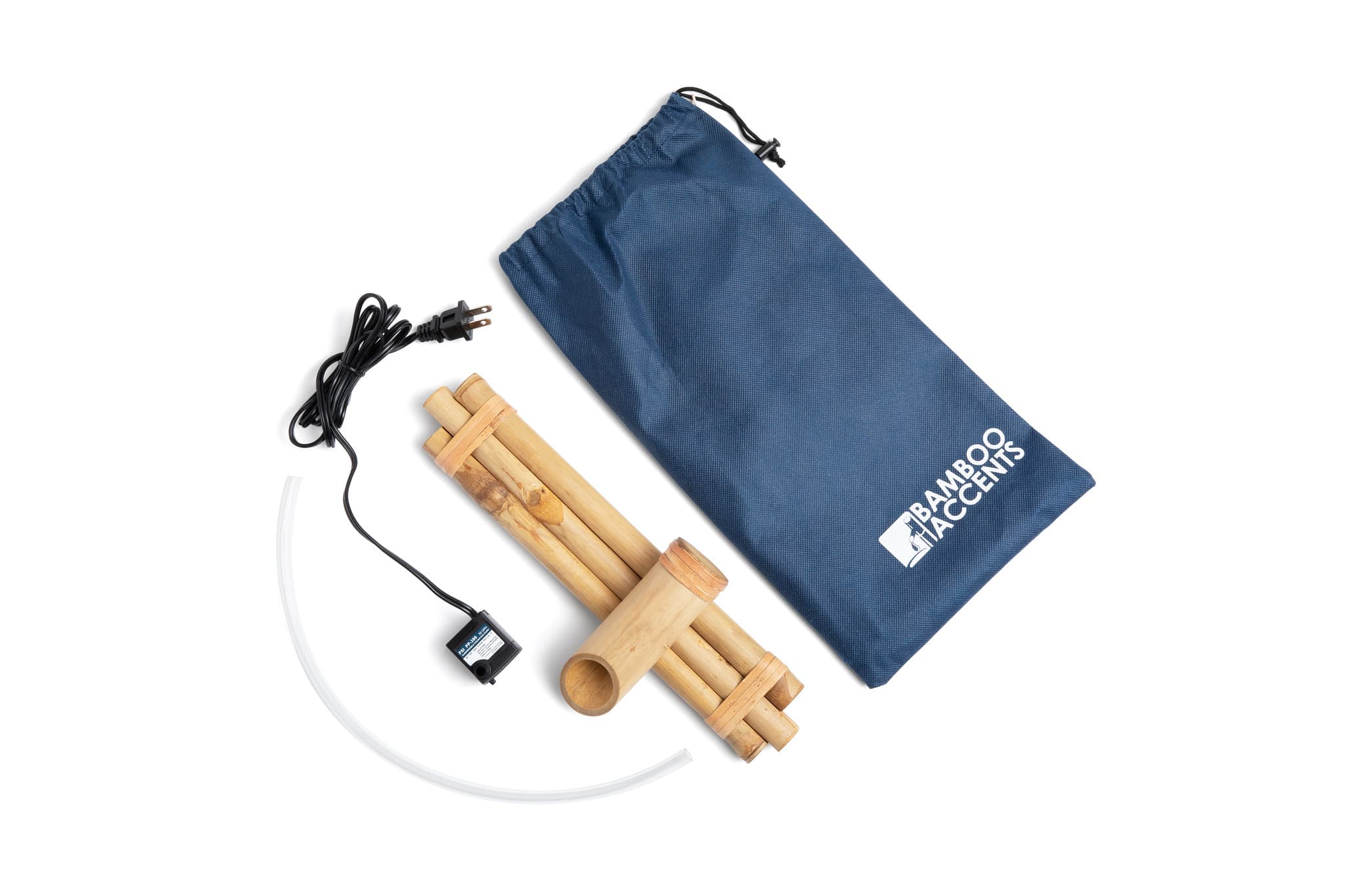
When people ask us why their fountain doesn't look quite right, the answer is almost always the container. The bamboo spout is the instrument — the container is the stage. Get the container right and everything else falls into place.
The Three Things That Matter Most
1. Size
The container needs to be wide enough for the fountain's arms to rest on the rim and deep enough to hold the pump underwater.
| Fountain Size | Minimum Container Width | Minimum Depth | |---|---|---| | 7" | 8 inches | 6 inches | | 12" | 12 inches | 8 inches | | 18" | 14 inches | 8 inches |
Width is more important than depth. A wide, shallow bowl often looks better than a tall, narrow pot because the water has room to fall and ripple. That said, deeper containers hold more water, which means less frequent refilling.
2. Watertightness
This is non-negotiable. Your container must hold water without leaking. That means:
- Glazed ceramic: The most popular choice. The glaze seals the clay so water doesn't seep through. Unglazed terracotta will leak.
- Stone or concrete: Naturally watertight. Heavier, but very durable outdoors.
- Metal: Copper, galvanized steel, and cast iron all work. They develop patina over time, which many people prefer.
- Resin or fiberglass: Lightweight and fully sealed. Good option if you need to move the fountain.
- Wood (sealed): Wine barrels and sealed wooden planters can work if they're lined or properly sealed.
If your container has a drainage hole, you can seal it with a rubber plug, silicone caulk, or plumber's putty. This takes five minutes and opens up a huge range of planters that would otherwise leak.
3. Stability
The fountain sits on the rim of the container, so it needs to be stable enough that it won't tip. Wider, lower containers are more stable than tall, narrow ones. If you're using a lightweight pot (resin or thin ceramic), consider adding some river rocks to the bottom for ballast before filling with water.
Best Container Styles by Fountain Type
For Adjustable and Three-Arm Fountains
These sit across the rim of the container with arms resting on opposite sides. Wide, round bowls work best — the classic look is a low ceramic bowl in a neutral or earth tone.
For Classic Fountains
The Classic style has a single horizontal arm that rests on one edge. It works in round or rectangular containers and looks great in stone basins or square planters.
For Rocking Fountains (Shishi Odoshi)
The rocking fountain needs a container that can catch the water as the bamboo arm tips. A wide, shallow stone basin with river rocks is the traditional pairing. The container doesn't need to be as deep because the water pours from a low height.
Where to Find Good Containers
You don't need to buy a specialty fountain basin. Here are places to look:
- Garden centers and nurseries — best selection of glazed ceramic pots, especially in spring
- Home improvement stores — look in the outdoor/garden section for large planters
- Thrift stores and estate sales — great for finding unique stone or ceramic pieces
- Online retailers — search for "glazed ceramic planter" or "garden bowl"
- Our recommended pots page — we've curated specific containers that pair well with each fountain size
Container Colors That Work With Bamboo
Bamboo is a warm, golden-tan material. Containers that complement it best:
- Dark charcoal or black — high contrast, modern look
- Deep blue or navy — classic, makes the water look deeper
- Earth tones (brown, terra cotta, olive) — natural, blends with outdoor settings
- White or cream — clean, bright, works well indoors
Avoid containers with busy patterns or very bright colors — they compete with the bamboo and water rather than framing them.
Common Mistakes
Container too small: The most common mistake. If the fountain arms barely fit on the rim, the water will splash outside the container. Go wider than you think you need.
Container too deep and narrow: A tall, narrow pot hides the water surface and muffles the sound. The visual and auditory appeal of a fountain comes from seeing and hearing the water land.
Forgetting about the cord: The pump has an electrical cord that needs to exit the container. Most people run it over the rim and down the back, hidden by the container's position against a wall or in a corner. Plan your placement with the cord in mind.
Not testing for leaks: Before setting up your fountain, fill the container with water and let it sit for a few hours. If the water level drops, find and fix the leak before adding your fountain.
Need help matching a container to your fountain? Check our recommended pots page or contact us — we're happy to help you find the right fit.